Influence and Innovation in 2025: Shaping What Comes Next in Biotechnology and Pharmaceutical
12 Jun, 20262 minutes
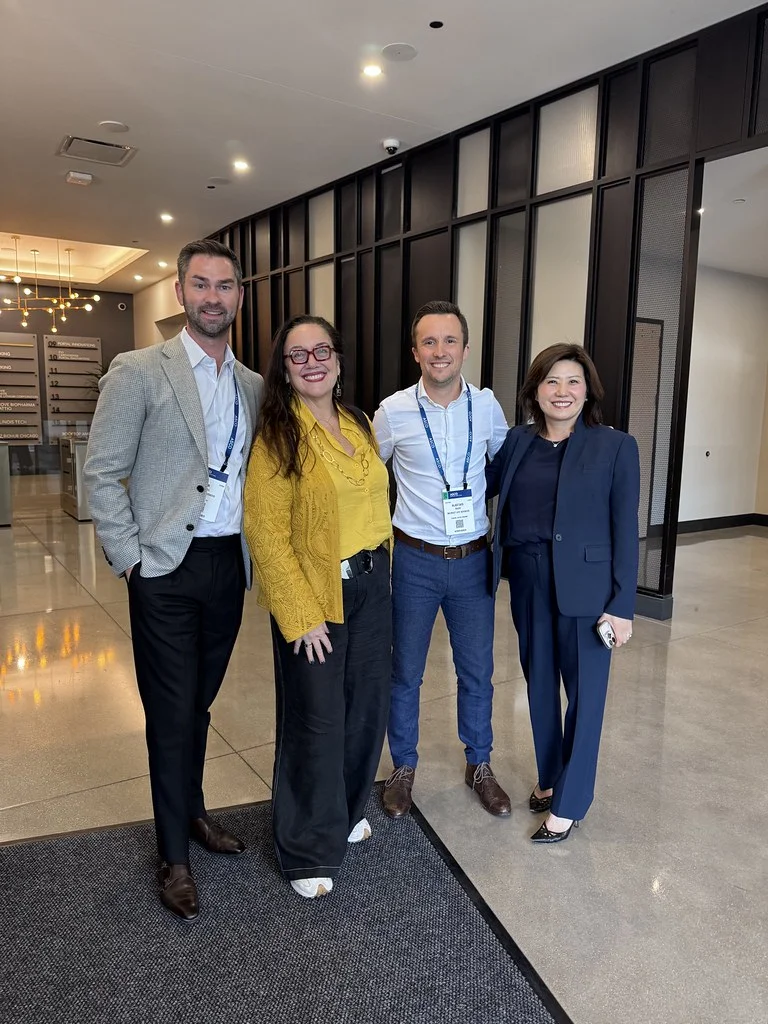
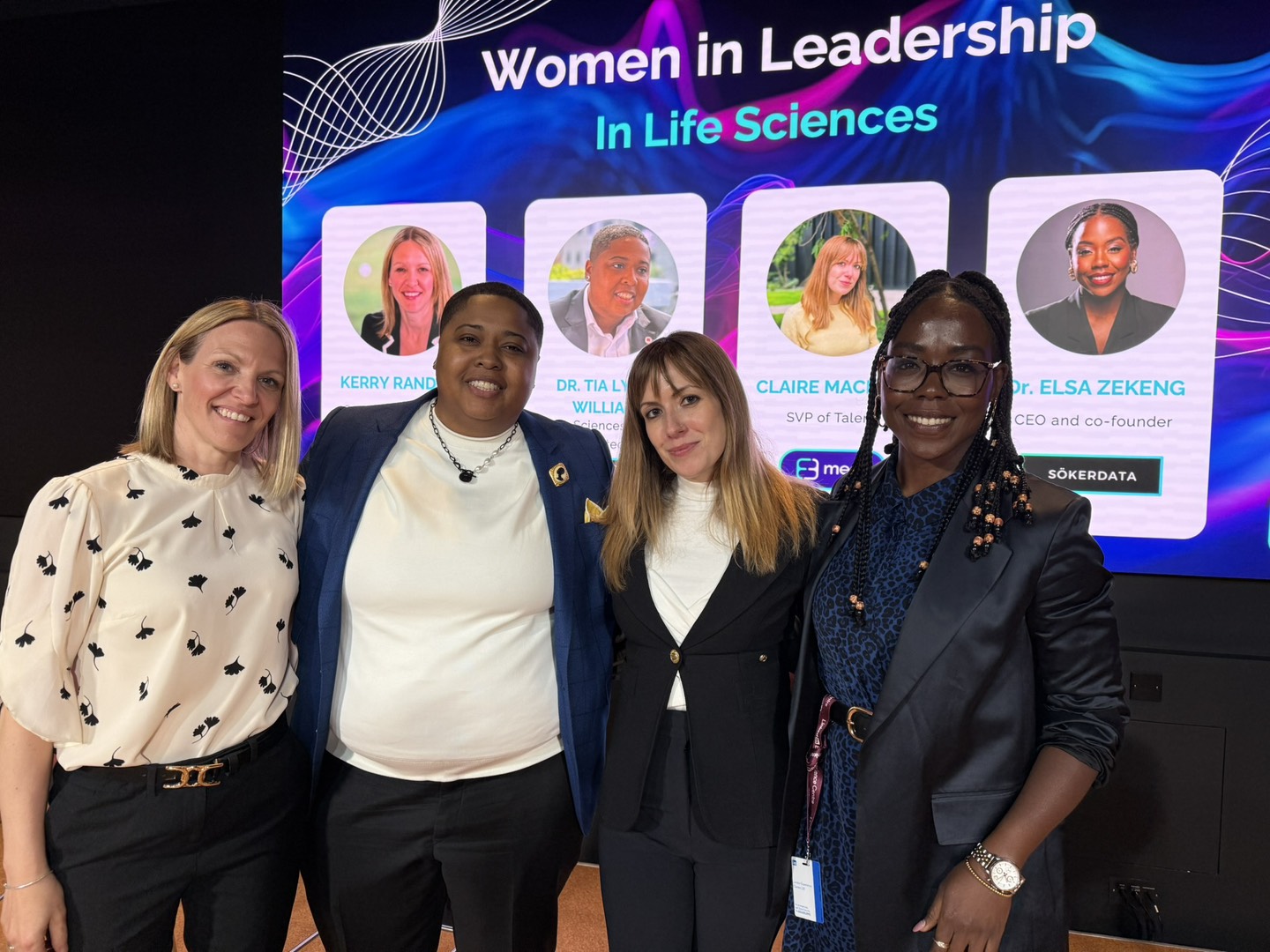
A How Women Lead panel sponsored by Mx, May 30th 2026
Biotech, pharma, AI, and healthcare delivery are all moving fast - and often in different directions. But one question keeps coming up:
Who decides what gets funded, built, scaled, and ultimately reaches patients?
This question shapes how we approach the work we do at Mx. It was also the core theme of Influence & Innovation: Shaping What Comes Next in Biotechnology and Pharma, a panel we were proud to sponsor at Portal Innovations in Chicago.
The room brought together investors, founders, operators, scientists, and healthcare leaders, each offering a different perspective on how ideas make the journey from discovery to real-world patient impact.
Panelists:
Alastair Shaw – Co-Founder Meet Life Sciences & Managing Director, Mx Life Sciences
Jennifer Lee – Executive Vice President, Novita Pharmaceuticals & Cancer Fund
Julie Castro Abrams – CEO, How Women Lead; Partner, How Women Invest
Hala Borno, MD – Founder & CEO, Trial Library
John Connolly, PhD – Chief Scientific Officer, Parker Institute for Cancer Immunotherapy
KT Moorgat, PhD – Managing Partner & Founder, Dalena Capital
Dimitra Georganopoulou, PhD – General Partner & Co-Founder, Qral Ventures
Cynthia Chan, PharmD – Executive Group Medical Director, Genentech-Roche
Key Themes Shaping the Future of Biotech and Pharma
Five themes kept resurfacing throughout the discussion:
Innovation is not a science problem - it’s an execution problem
Clinical trial access is finally becoming solvable
AI will transform healthcare - but not in the way many expect
Collaboration is becoming a real competitive advantage
Women remain underrepresented in innovation leadership
Theme 1: Innovation Is Not a Science Problem, It's An Execution Problem
One point that really stuck came from John Connolly, who challenged a common industry assumption.
We celebrate discovery - the breakthrough paper, the novel target, the new mechanism. But discovery alone rarely changes patient outcomes
Execution is where most efforts fail.
Moving an idea through regulation, trials, commercialization, reimbursement, and ultimately into patient care requires a complex network of expertise and coordination.
Connolly argued the industry often overvalues discovery and undervalues the operational work required to bring it to life.
The winners of the next decade may not necessarily be those with the most novel science. They may be the organizations that can execute faster, more effectively, and more collaboratively than their competitors.
Theme 2: The Clinical Trial Access Problem is Becoming Solvable
While precision medicine continues to advance rapidly, patient access remains one of healthcare's biggest challenges.
Hala Borno highlighted:
Approximately 30% of cancer patients may be eligible for a clinical trial
Only about 5% ultimately enroll
Roughly 85% of cancer patients receive care in community settings, while most trials sit in academic centres
The result is that patients and innovation exist in completely different places.
Borno described how AI is starting to help. Matching patients to trials using clinical data is becoming faster and more accurate. But technology alone won’t fix the problem.
The real barriers are operational:
Referral pathways
Prior authorizations
Transportation
Care navigation
Provider workflows
Patient support services
The future of clinical trial enrollment may depend less on finding eligible patients and more on removing friction from the healthcare system itself.
Theme 3: AI Will Transform Healthcare - But Not in The Way Many Expect
Artificial intelligence was an unavoidable topic throughout the discussion.
Participants agreed that AI is already creating value across:
Drug discovery
Target identification
Clinical trial matching
Medical insight generation
Workflow automation
Precision medicine
At Genentech-Roche, Cynthia Chan described how AI is being used to accelerate target identification and improve development efficiency.
But several speakers pushed back on the hype.
KT Moorgat noted that while billions are flowing into AI-enabled healthcare companies, expectations are often ahead of reality. AI has made strides in areas like protein structure prediction and trial optimization - but it still can’t reliably answer the hardest question:
Will this therapy actually work in humans?
The takeaway was that AI will be a powerful tool, but it won’t replace scientific rigor, clinical evidence, or strong execution.
Like every major technology wave, we’re likely moving from overinvestment toward more practical, value-driven applications.
Theme 4: Collaboration Is Becoming a Competitive Advantage
A recurring theme throughout the evening was the importance of ecosystems. No single organization has all the capabilities required to advance innovation from concept to patient.
John Connolly emphasized that the best collaborations aren’t transactional - they’re built on trust,
shared goals, and sustained engagement.
When they work, they unlock outcomes no individual organization could achieve on its own.
We’re already seeing this across:
Academic–industry partnerships
Venture–founder relationships
Cross-functional development teams
Public–private collaborations
Regional innovation ecosystems
The future of healthcare innovation may be increasingly determined by network strength rather than organizational size.
Theme 5: Women Remain Underrepresented in Innovation leadership
Julie Castro Abrams opened the evening with a challenge to the audience.
Women control a growing share of wealth, make the majority of healthcare decisions, and are founding more companies than ever. Yet they continue to receive a small fraction of venture funding - despite strong performance.
The panel explored both structural and cultural barriers, particularly the tendency for women to be evaluated on proven track record, while men are often backed on potential.
The result is not simply an equity issue - it is an innovation issue.
If healthcare is serious about solving its biggest challenges, it needs broader participation in who builds, funds, and leads.
Where This Leaves Us
As the conversation concluded, panelists reflected on what excites and concerns them most about the future.
What Excites The Experts:
Faster, AI-enabled discovery
Growth in precision and biomarker-driven therapies
New models for clinical trial access
Continued innovation in oncology, neuroscience, and rare disease
Strong collaboration across sectors
What Concerns The Experts:
Tight venture funding markets
Underinvestment in early-stage therapeutics
Regulatory uncertainty
Government funding pressures
Global competition for scientific talent
The competitive advantage that has historically positioned the United States as the global leader in life sciences cannot be taken for granted
What Comes Next
What stood out most from the evening is that the future will not be determined solely by scientific breakthroughs. It will be shaped by decisions about:
Where capital flows
Which founders receive support
How quickly organizations execute
Who has access to clinical trials
Whether AI augments or distracts from meaningful progress
And ultimately, which innovations make the journey from laboratory bench to patient bedside
Ultimately, innovation is not just about what’s possible - it’s about what actually reaches patients. The organizations that will continue to lead are those that can connect science, capital, technology, and execution, and move ideas all the way from bench to bedside.
If you’re building, scaling, or investing in the next generation of healthcare innovation, we’d love to connect. If hiring is part of your focus, you can reach us here.
Related Posts
Meet Life Sciences Sponsors Leap TA: Life Sciences 2025
22 Sept, 2025
4 Key Takeaways: Meet’s Women in Leadership Event
20 May, 2025