5 Trailblazing Women Who Have Made Life Sciences What It Is Today
26 Mar, 20265+ minutes
Throughout history, women have faced the uphill battle of gender biases and stereotypes. In the STEM field specifically – which has long been male-dominated – women have to work harder to succeed in environments that are designed by men, for men.
As a result, we see a troubling lack of gender parity at the top level of organizations. Although we have progressed to seeing 50% of entry-level positions in life sciences and healthcare comprising of women, they become a minority at C-suite level – accounting for just 15% of CEO positions.
The reality is, women in science deserve more recognition. Not only for their scientific discoveries and life-changing research (which often goes underacknowledged) but also for excelling and standing out in a world that works against them.
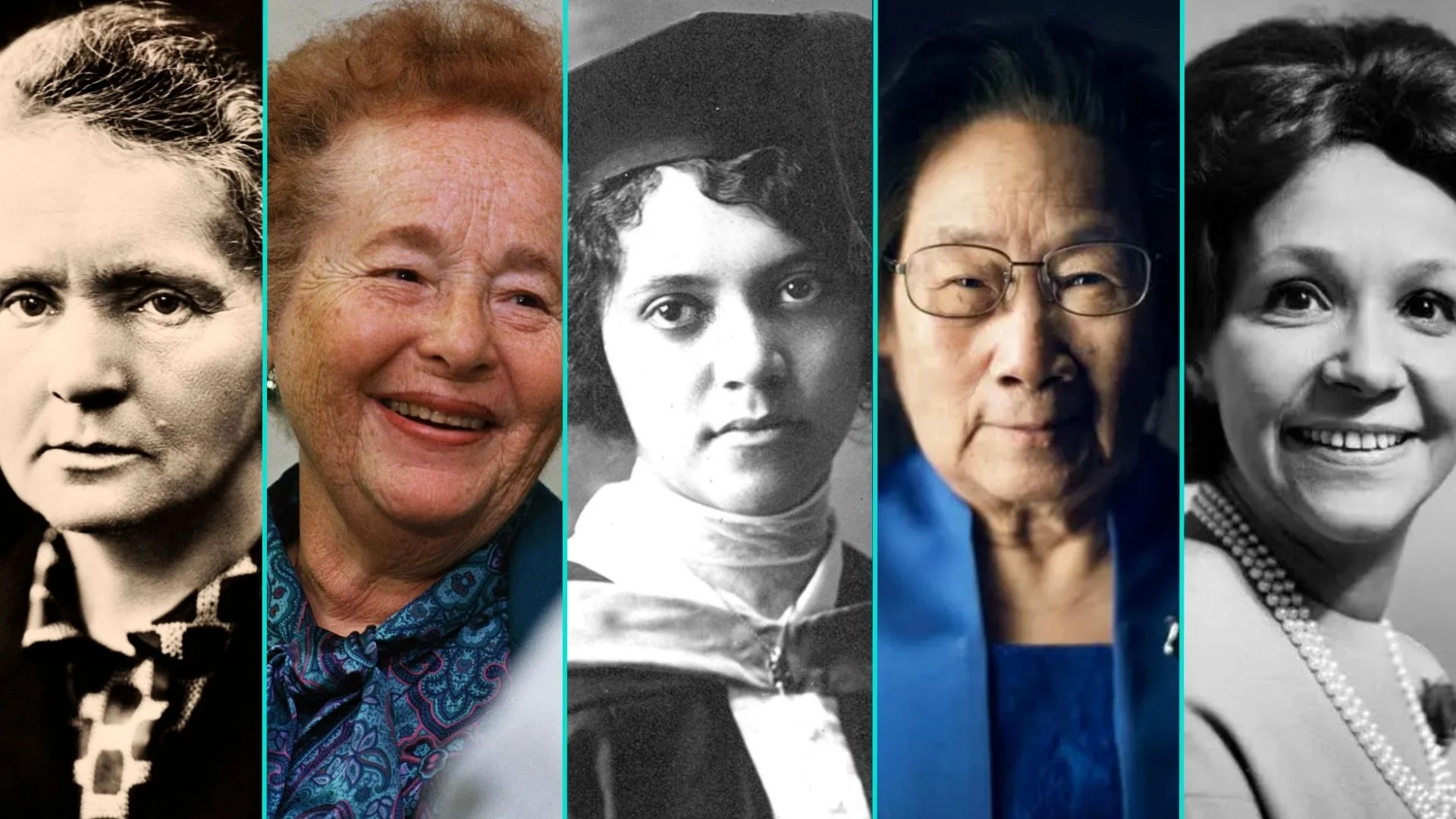
Below, we’ve championed five women in science who have accomplished incredible feats. Including both big names and individuals you’ve likely never heard of, we wanted to take a moment to celebrate the excellence and intelligence of the following scientists, as well as their tremendous contributions to global health outcomes.
1) Marie Skłodowska Curie (1867-1934)
Polish-born Marie Skłwodowska Curie is one of the biggest names in science, and for good reason. She accomplished incredible scientific feats which led her to become the first person in history to be awarded two Nobel Prizes.
Her rise to scientific excellence was not plain sailing. In Poland (and much of Europe at the time), women were forbidden from attending official universities and gaining higher education. Curie had no choice but to attend the ‘flying university’, an illegal institution where women could access teaching.
Following a move to Paris, her groundbreaking discoveries of radioactive elements, polonium (named after her home country) and radium, took place in 1989, where she coined the term radioactivity.
It is Marie Skłodowska Curie who first discovered that radium could treat tumors – a medical revelation that contributed to the radiation therapy that is still used today. She also promoted the use of radium to alleviate suffering and save thousands of soldiers’ lives during WWI with mobile x-ray units called petites Curies.
2) Tu Youyou (1930-present)
Tu Youyou is a Chinese medicine expert and pharmaceutical chemist who, in 2015, was awarded the Nobel Prize in Physiology or Medicine.
Her remarkable discovery has saved (and continues to save) millions of lives from what was once one of the world’s deadliest diseases: malaria. In the 1970s, Tu discovered artemisinin, a herbal compound that became the active ingredient in a new class of antimalaria drugs.
At this time, chloroquine-resistant malaria had become a major global health concern that was causing a significant increase in deaths. With Vietnamese troops being particularly affected, Tu was appointed head of a research group called Project 523 to find a cure.
After deciding to screen traditional Chinese herbs, Tu found that one particular compound in sweet wormwood (later known as artemisinin) was hugely efficient. After successful testing on mice and monkeys, Tu then volunteered to be the first human test subject – a testament to both her bravery and confidence in her discovery.
Since her groundbreaking finding, artemisinin has immeasurably improved human health and reduced suffering across the world’s malaria zones.
3) Gertrude B. Elion (1918-1999)
Gertrude B. Elion was an American pharmacologist who developed pivotal drugs for malaria, herpes, gout and organ transplant rejection. She also discovered the first successful chemotherapy for childhood leukemia, which helped many children to survive.
Born two years before women could legally vote in the United States, Elion found employment difficult as a scientist due to her gender. Ony when men where conscripted to fight in WWII did she find work as a chemist in a laboratory.
During her career, Elion revolutionized the development of new pharmaceuticals – as well as the general field of medicine. Prior to her research, new drugs were developed via a rather haphazard, trial and error approach. But thanks to Elion, a new, systematic method was introduced. Drugs began to be produced based on existing knowledge of biochemistry and diseases rather than guesswork, which made the process much more efficient.
In 1988 she won the Nobel Prize for Physiology and Medicine – and despite officially retiring five years earlier, she helped oversee the development of azidothymidine (AZT), the first drug used to treat AIDS.
4) Jane Cooke Wright (1919-2013)
Dr. Jane Cook Wright was a pioneering oncologist and surgeon best known for being a trailblazer in chemotherapy research. As an African American woman whose grandfather was born into slavery, Wright had to work incredibly hard to prove herself and her extraordinary talents in a country so deeply divided and fueled by racial violence (and misogyny).
Wright was inspired by her father, who was the first African American doctor to work at a public hospital in New York City. Her intellect and resilience led her to graduate from the New York Medical School at the top of her class in 1945.
In the years that followed, Wright discovered that nitrogen mustard agents (similar to mustard gas components used in WWI) could be used to treat leukemia patients. This was a monumental discovery that took chemotherapy from a preliminary drug to the valuable pillar of cancer medicine that it is today.
She was also the first to identify methotrexate, a drug which is now used widely for autoimmune and inflammatory conditions and is also a vital component in some chemotherapies.
In 1964, Wright become the only woman among seven doctors to co-found the American Society of Clinical Oncology. Her contribution to cancer medicine was truly revolutionary – and after publishing more than 100 research papers during her esteemed career, she became known as the “Mother of Chemotherapy”.
5) Alice Ball (1892-1916)
Alice Ball was an African American chemist who, very early into her career, discovered a groundbreaking treatment for leprosy (earlier known as Hansen’s disease). Born in Seattle, Washington in 1892, Ball became both the first woman and first African American to graduate from the College of Hawaii, where she earned a Master's degree in chemistry in 1915 – just a year before her death.
During university, Ball worked on chaulmoogra oil, a type of oil that, despite being the only existing treatment for leprosy, was exceedingly difficult to administer and use effectively. Her work led her to create a water-soluble solution of the oil’s active compounds that could be safely injected and absorbed by the body, with fewer side effects. This allowed leprosy patients to recover and return safely home to their families.
Tragically, Ball didn’t live long enough to publish her remarkable findings. Moreover, a white male colleague of her’s took credit for her achievements, named the method after himself and stole her life’s work for 85 years, until her name and contributions were eventually rediscovered and recognized.
During her painfully short yet impactful life, Alice Ball’s bravery and determination to overcome the horrific, systemic racism (and sexism) of the early 20th century makes her exceptional academic brilliance that much more impressive.
This list represents a tiny proportion of the many wonderful women who dared to discover. If you’re a woman working in pharma, biotech, health tech or any other part of life sciences – we wanted to extend big thank you for your contribution, also.
You deserve more recognition for doing brilliant things for global health while navigating the barriers and biases that are still so deeply engrained in our society. We see you and appreciate you!